

The Franciscan Heart of Thomas Merton
Daniel P. Horan, PhD, a longtime Thomas Merton scholar, professor, and author of The Franciscan Heart of Thomas Merton, sits down to discuss how the Franciscan tradition helped shape the journey and spirituality of Thomas Merton, one of the 20th century’s most influential contemplatives

John Duns Scotus: Four Theological Insights That Change Everything
What if the Incarnation wasn’t primarily about fixing our sin but about God’s extravagant desire to become one with all creation? What if beauty isn’t just something we admire—it’s the heartbeat of reality, calling us to slow down, receive gifts, ...

God Is Always Good
The Jesuit poet Gerard Manley Hopkins crystallized so beautifully the effect that John Duns Scotus’ teaching has on mystical minds: Yet ah! this air I gather and releaseHe lived on;These weeds and waters, these walls are whatHe hauntedWho of all ...

The Beauty of Humanness
The God we see in this image is a God of such overflowing love that it spills over into all of creation and into our hearts.

Wonder and the Uniqueness of Creation
Reflect Franciscan theologian John Duns Scotus developed the philosophical notion of haecceitas, the idea of particularity or “thisness.” This is an important concept to Franciscans, as the uniqueness of each thing within creation can help us to open our eyes ...
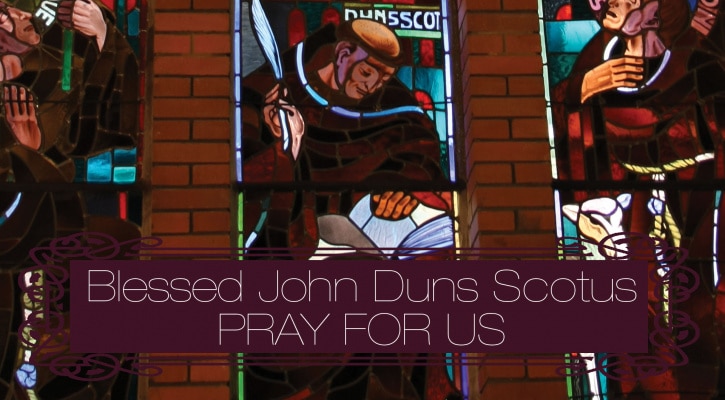
Friar to Friar: Richard Rohr on John Duns Scotus
The unkind word “dunce” is a pejorative of the little town of Duns in southern Scotland where John the Scot was born and raised.
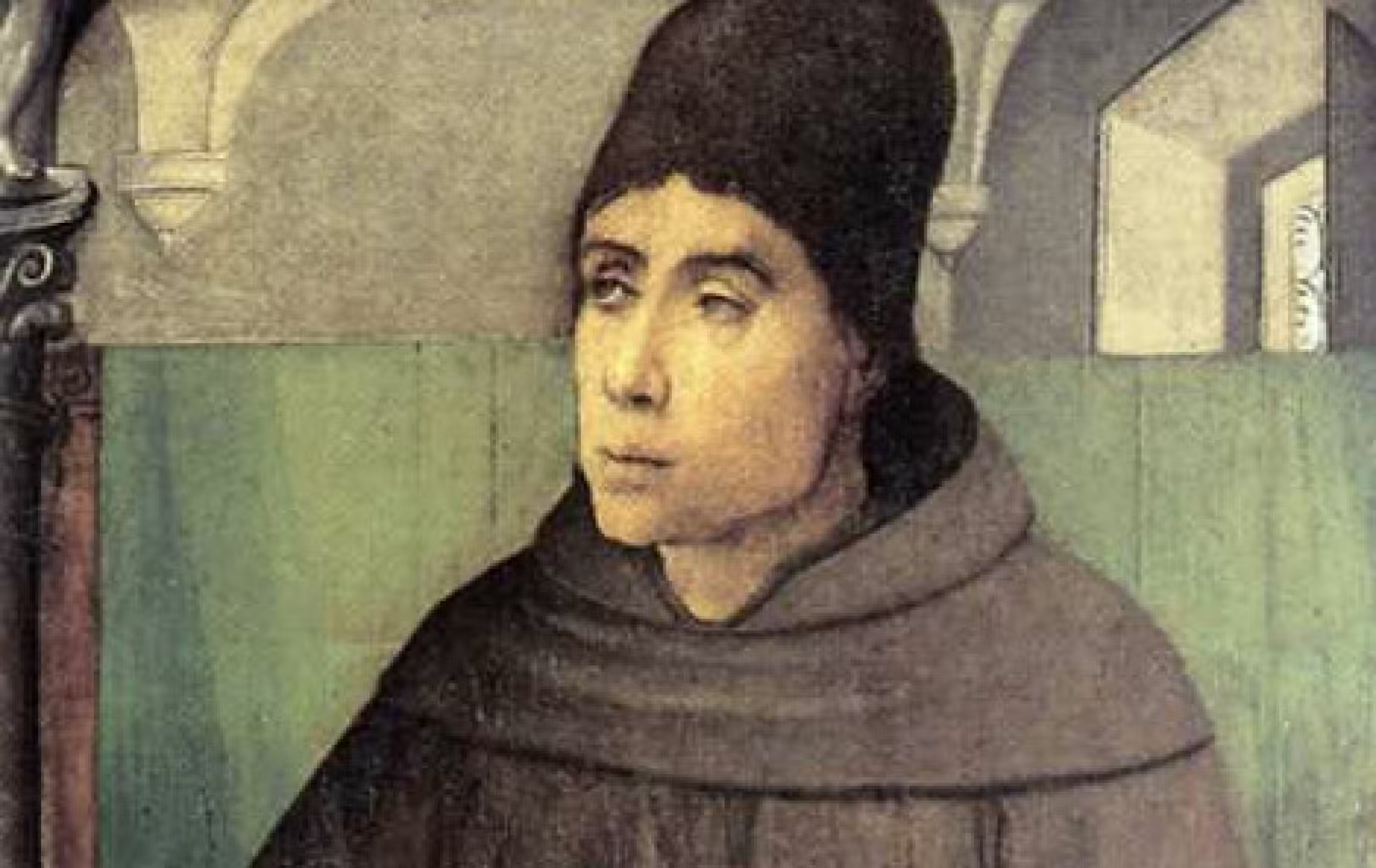
John Duns Scotus: His View of Christ
Was the sin of Adam and Eve the main reason Christ came to save the world? Not really, says Blessed John Duns Scotus, a Franciscan theologian of the 13th century.