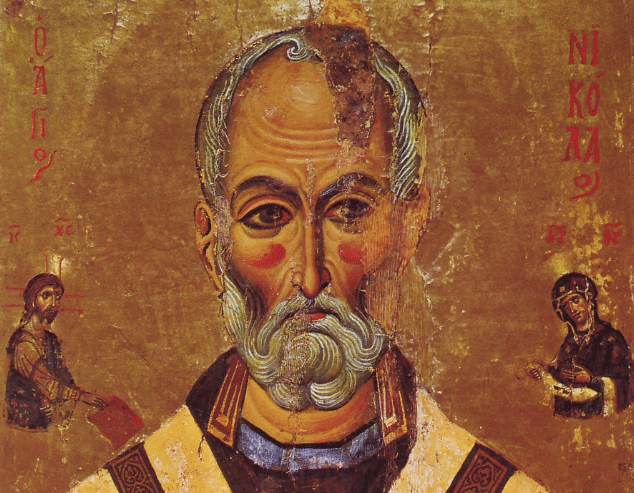
Advent with Saint Nicholas
It’s well known that Saint Nicholas, a sixth-century bishop, is behind our use of the secular “icon” of Christmas, Santa Claus. The legends of Nicholas involve his generosity to those in need.

It’s well known that Saint Nicholas, a sixth-century bishop, is behind our use of the secular “icon” of Christmas, Santa Claus. The legends of Nicholas involve his generosity to those in need.

Saint Francis could have become a carnival sideshow all by himself if he had failed to foster an attitude of humility.
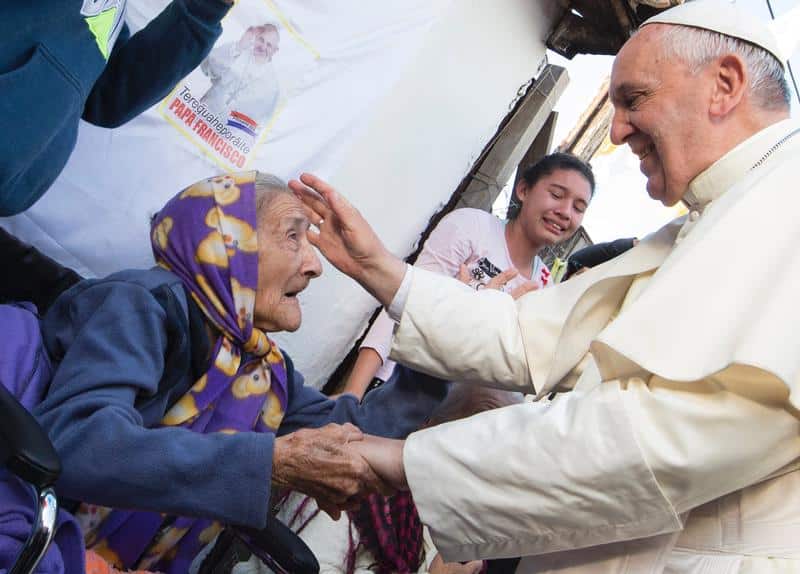
I prefer a Church which is bruised, hurting, and dirty because it has been out on the streets, rather than a Church which is unhealthy from clinging to its own security.
My hope is that we will be moved by the fear of remaining shut up within structures which give us a false sense of security, within rules which make us harsh judges, within habits which make us feel safe, while at our door people are starving.

Every family is a work in progress, but each one can move toward wholeness. Circumstances differ, but every family needs peace, love, and trust. Christian hope springs from belief in God’s presence during life’s high and low points.
In the struggle for wholeness, families become holy and generate holiness in others. Holy families, not perfect families, are sources of hope to those facing dark and painful times.
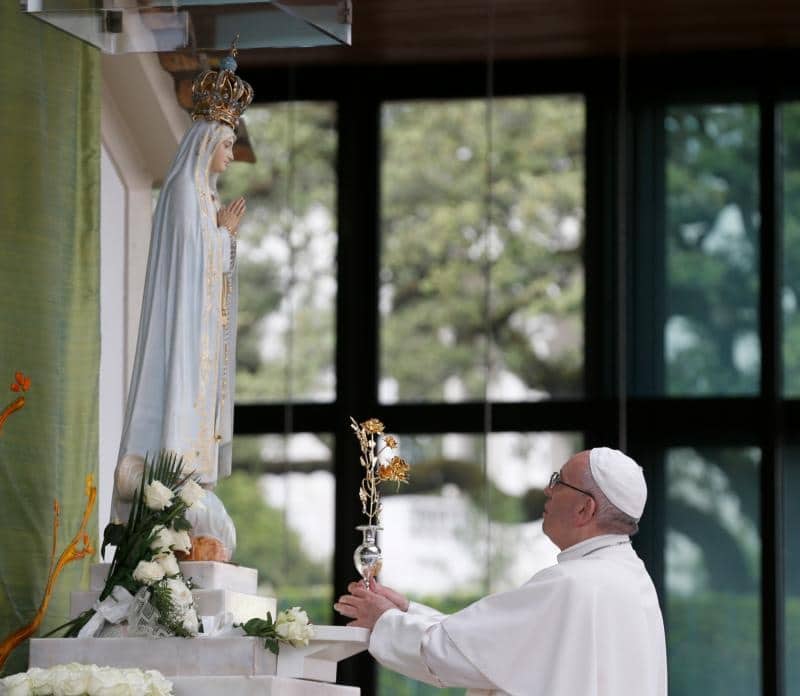
The attitude of Mary shows us that being comes before doing, and to leave the doing to God in order to be truly as he wants us. Mary is receptive, but not passive. Because, on the physical level, she receives the power of the Holy Spirit and then gives flesh and blood to the Son of God who forms within her. Thus, on the spiritual level, she accepts the grace and corresponds to it with faith.
She conceived first faith and then the Lord. This mystery of the acceptance of grace, which in Mary was without sin, is a possibility for all.

God calls every one of us into a relationship of intimate, personal, loving, and life-giving communion. He is inviting us to share his life and the life of his whole family. Our response to God’s invitation to intimacy and communion is to be the person he created and calls us to be—to make a gift of ourselves—because when we give ourselves away in love, we truly find ourselves.

Thanksgiving focuses on God’s gifts. Our challenge is to take nothing for granted, but to appreciate every blessing. Thanksgiving is a way of life. Indeed, the prayer of thanksgiving characterizes a eucharistic people.
Our gratitude centers on the greatest gift of all—Jesus. This gift, and all the other gifts through God’s providence, are expressions of God’s love. How fitting and just it is that we always and everywhere express our gratitude to the Lord.