

The rather large heavenly choir of patron saints for nurses, doctors, pharmacists, and many other healthcare professions is missing a genuine healthcare provider. Even a shallow dive into Google found 29 saints assigned to healthcare, and one wonders if they fight among themselves for top billings. Many weren’t healthcare providers, though, but recipients of care. No disrespect to healthcare patron St. Agatha, who was tortured and had her breasts removed after rejecting a powerful suitor. She had a vision of St. Peter healing her wounds, and now she is in that heavenly choir, or waiting room, of healthcare patron saints. But she and others in that choir never provided healthcare.
Overlooked is a genuine healthcare provider of the 13th century, Margaret of Cortona, Italy, and—although not known to hardly anyone—I nominate her as a healthcare patron saint. But not a patron of doctors, nurses, pharmacists and other professionals with degrees. They have sufficient saintly support. Margaret should be the patron saint of those healthcare workers—mainly people of color and immigrants—who sought out starting level jobs in hospitals, nursing homes, and home care agencies, so they could work their way out of poverty and into the middle class. These are the patient care assistants I’ve met who tenderly clean incontinent patients or shroud still warm bodies. They are the home aides who travel by bus to cook small meals for the elderly homebound.
Margaret was born around 1247 in a small Umbrian town and became the mistress of a nobleman, as described by scholar Darleen Pryds in her book, Women of the Streets: Early Franciscan Women and their Mendicant Vocation. When her unmarried partner died and left her penniless and with an unsavory reputation, she moved with her son to Cortona. Two noblewomen there saved her life by housing, feeding, and clothing her.
In their care Margaret became a woman of faith and sought to wear the habit of a Franciscan lay member. Just like today’s job applicants sometimes have to persevere to find that home care job, Margaret persevered and in time she was admitted to the Franciscan lay order. She then started an active ministry in healthcare, caring for the poor who were ill. Her exact duties are unknown, but we know she mixed her spirituality with care, baptizing babies she helped deliver. New mothers sought her out for women-to-women counsel.
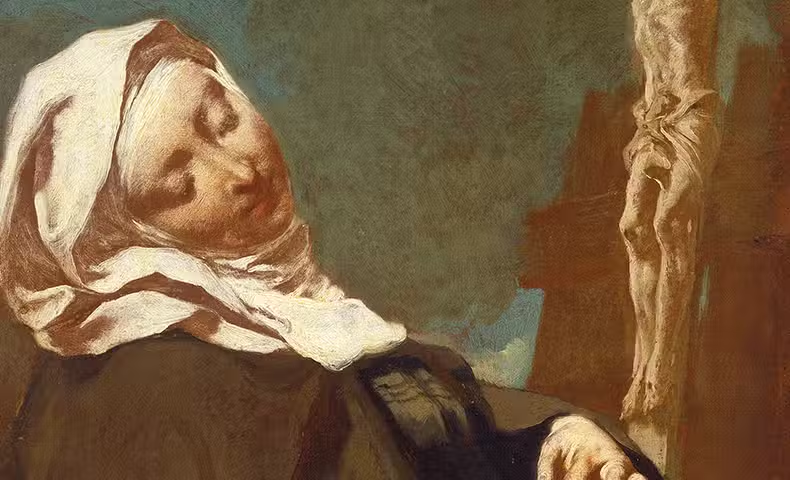
She also made public displays of her faith, and people from Italy and Spain sought her out for spiritual advice and practical advice. “Her special capacity for advice-giving, however, was within the context of healing works,” wrote Professor Pryds, a historian on the faculty of the Franciscan School of Theology.
In hospitals I know, doctors are often viewed as gods but appear and disappear quickly. Nurses are stretched thin caring for too many patients. But it is the unheralded women and men who answer call lights, check blood pressures, wipe spilled fluids off floors, and change soiled linens. Some are the only ones on the hospital floor who can speak to the patient who only speaks Creole. They seem to be always around to reassure an anxious patient.
While we don’t know exactly what care Margaret of Cortona provided her patients, it does not strain credulity to think she cleaned amniotic fluids from new moms and their newborns, and sought out the father and grandparents with news. It does not strain credulity to believe this woman who had gone through birth herself could speak woman-to-woman with authority on a variety of health, emotional and spiritual issues. It is noted also that she provided health care to friars, providing nursing mixed with spiritual care.
Toward the end of her life, Margaret secluded herself and broke from the Franciscans. We don’t know why. Today we might speculate the cause was burnout.
Like some of the Franciscans did, now seems a good time to claim and embrace Margaret of Cortona. Let her be known as a patron saint of healthcare whose hands actually handled afterbirths and blood and breast milk and deceased babies and children and who congratulated joyful families and offered solace to mourning family members. She is unheralded just like today’s Black and Hispanic and Caribbean home care aides, patient care assistants, and cleaners, who are mostly but not exclusively women and who care tenderly for patients, and their family members, in their most vulnerable times. Let her be their patron saint.
Saint Margaret, who is just about unknown, wish us pax et bonum.