Lent with the Saints: Isidore the Farmer
An old joke defines a farmer as someone “outstanding in his field.” St. Isidore the Farmer not only stood out for his work in tilling the soil but was also a deeply prayerful man.

An old joke defines a farmer as someone “outstanding in his field.” St. Isidore the Farmer not only stood out for his work in tilling the soil but was also a deeply prayerful man.
The first days of Lent feature scriptural selections that emphasize the lenten practices of prayer, fasting, and almsgiving.
We can’t help but look at Noah through the lens of our modern sense of what’s acceptable behavior.
Isaiah 58:9b–14; Psalm 86:1–2, 3–4, 5–6; Luke 5:27–32
Luke—and Mark—tell us the story of Levi, a tax collector whom Jesus calls as a follower in today’s Gospel passage. Levi promptly throws a party for Jesus. More tax collectors and others show up as well, prompting criticism from the Pharisees and scribes. Their disapproval draws one of Jesus’ most important responses: “Those who are well have no need of a physician, but those who are sick; I have come to call not the righteous but sinners to repentance” (Luke 5:31–32).
Sharbel Makhluf was known for both his fasting and his care for those who sought him out for prayer and blessing.
Thomas More was a scholar, author, lawyer, family man, and chancellor of England.

Joel 2:12–18; Psalm 51:3–4, 5–6, 12–13, 17; 2 Corinthians 5:20—6:2; Matthew 6:1–6, 16–18

Marianne Cope listened only to God, accepting and caring for people others feared or found distasteful and putting her own health at risk.

I once heard a priest refer to everyone he met as a “saint.”
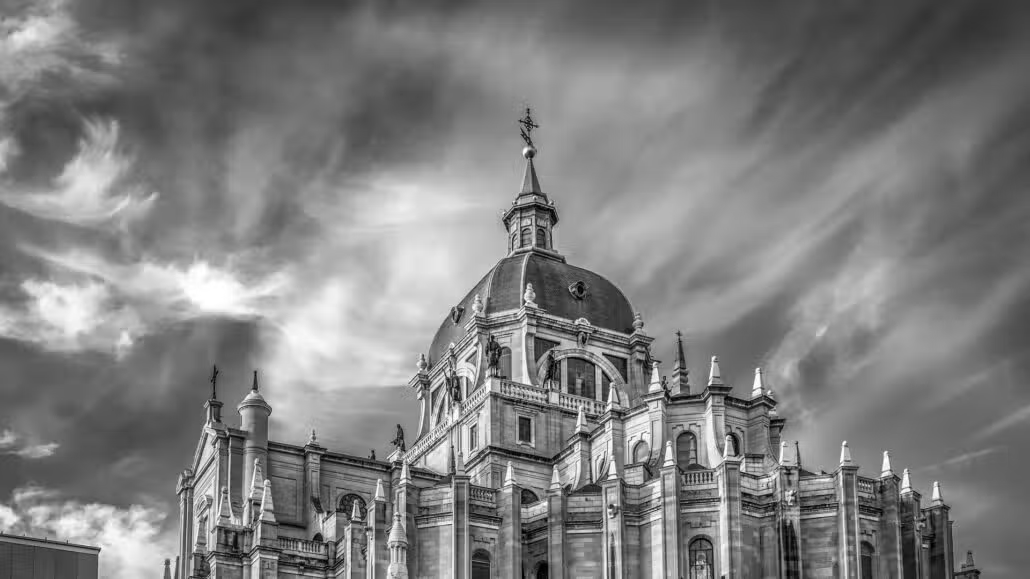
These Spanish saints lived long ago but can inform us and enlighten our faith journeys.