
Stir Our Hearts with Nearness
When Francis of Assisi was blind, ill, and on his deathbed, he wrote his famous “Canticle of the Creatures.” What if we allowed the Incarnation to stir our hearts as it did for Francis, even when we feel lost or frail?

When Francis of Assisi was blind, ill, and on his deathbed, he wrote his famous “Canticle of the Creatures.” What if we allowed the Incarnation to stir our hearts as it did for Francis, even when we feel lost or frail?

This week’s readings, says Father Greg Friedman, can be a good tool to help you plan your upcoming Lenten practices.
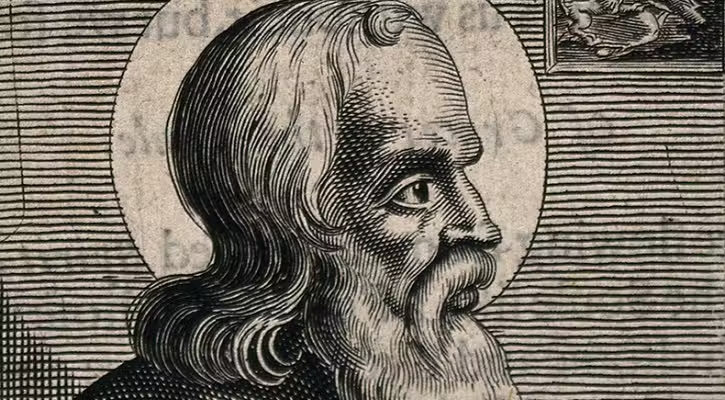
Without knowing a whole lot about Saint Polycarp, he has entered into the life of the Church because he was a martyr–a witness to the faith with his life. That level of testimony to the faith is notable.

Be creative in what you choose as external Lenten practices, but be certain they lead you to conversion in speech and action from a renewing heart.

All good is basically a sharing in God’s own goodness. It’s a privilege for us to be able to do good to others. It’s a privilege for us to be used as instruments of God for others.


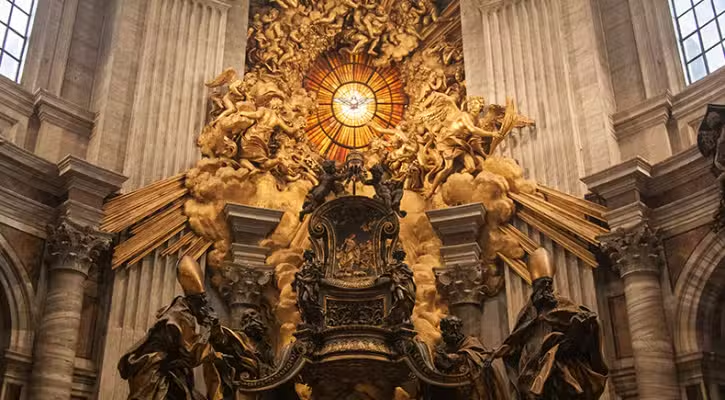
Every cathedral has a “cathedra,” a bishop’s chair that is used only by the bishop when he presides in the cathedral. It’s a symbol of his authority as chief teacher and liturgist of the diocese. So, today we celebrate the Chair of Saint Peter.

The Church pays honor to St. Peter because Peter held a special place in the mission of Jesus. Catholics honor the pope as the successor of St. Peter.

My lifelong curiosity prompts me to ask: 1) When and how did Ash Wednesday originate? 2) What was the specific thinking that inspired this practice? 3) Can you recommend reference sources on this subject?